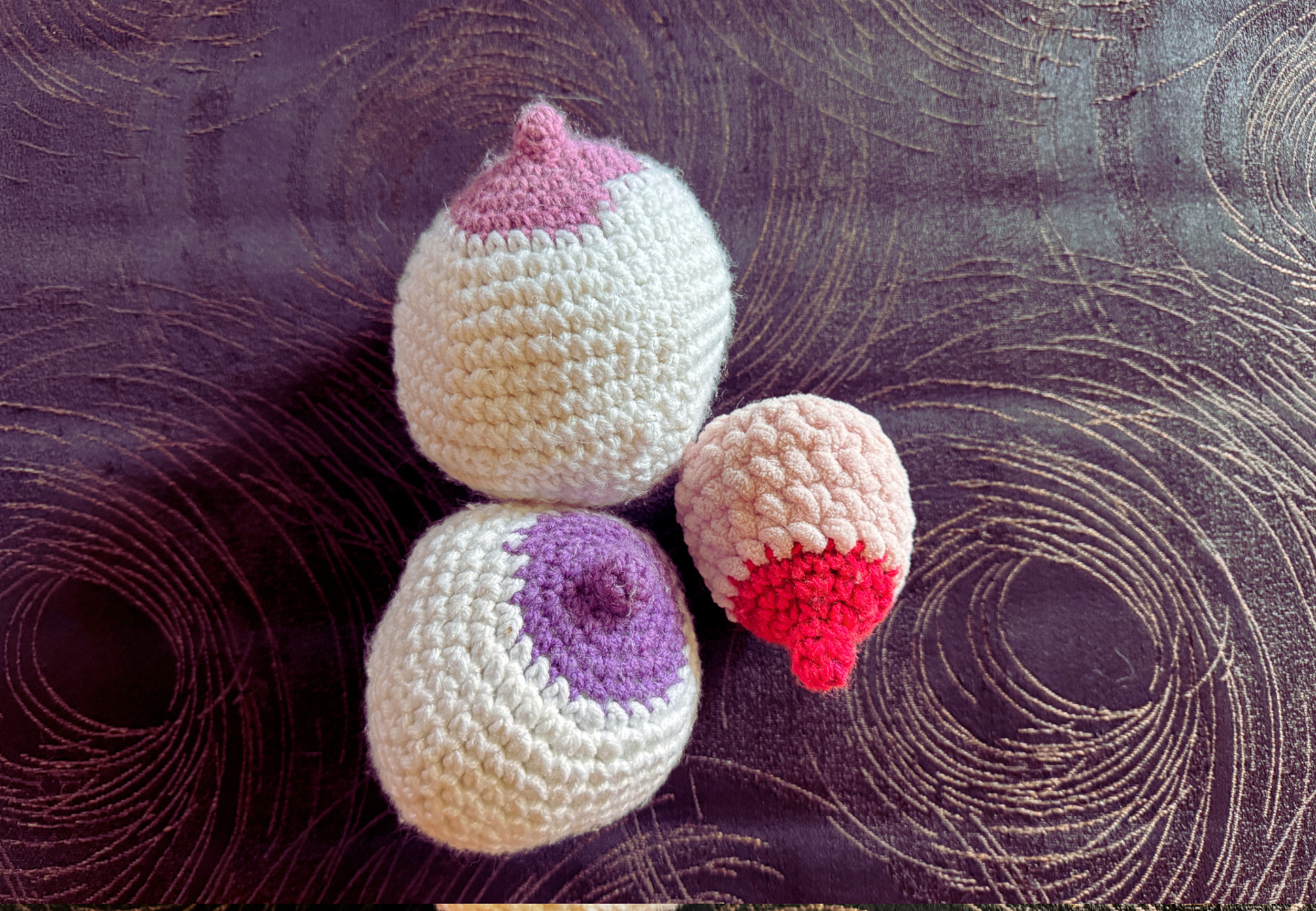
My very first mammogram, not what I expected
I was diagnosed with breast cancer in June 2025, and this is my first time speaking about it publicly. When I was in the thick of it, I just didn’t have the capacity to engage with anyone outside of my inner circle. I couldn’t explain why, but I gave myself permission to keep it close for as long as I needed. Even telling family and close friends was a challenge.
As the shock and strangeness started to fade and acceptance settled in, it became easier to talk about. I thought about if and when I would want to write about the experience.
Part of me kept thinking, “So many people are dealing with their own health and life challenges. What makes mine important to share?” And, “What do I have to offer that’s different from the many cancer stories out there, especially ones that were more serious than mine?” (Mine was caught very early. More on that later.)
As I grappled with those questions, I kept coming back to three things:
- Hearing other people’s personal stories has been one of the greatest supports during my journey.
- We all deal with things differently. I’m a fierce researcher and have built strong self-advocacy skills. If I can pass along resources or inspire others to advocate for themselves, that feels worth sharing.
- The aerial world is not just my career, it’s my community. To share something non-aerial related and be held not just as an aerialist, but as a human, is a gift. I can only receive that gift if I’m brave enough to show up as a whole person.
How It Started
I had a lump on my lower rib cage (not breast tissue). It was probably just a cyst. Still, it prompted a visit to a nearby CVS clinic. They ran blood tests, which all came back fine, and the lump disappeared on its own.
But during that appointment, the nurse looked at me and said, “Hey, you’re 41. You should get a mammogram.”
If that random cyst hadn’t happened, and if she hadn’t said something, I honestly don’t know how long it would have taken me to schedule one.
It wasn’t on my radar at all. I’m active, healthy, and have no family history of breast cancer or really any cancer. I’m a busy gal, and this just wasn’t something I was thinking about.
But I got my first ever mammogram, felt accomplished, and crossed that off the “adulting” list.
Fast forward to one month later after a secondary diagnostic mammogram and a very traumatic biopsy, I was told I have Stage 0 breast cancer.
The Big C
The moment of diagnosis felt like stepping through a door into a whole new world. (and not the magic carpet kind). Anyone who has been diagnosed with a disease or disorder knows this feeling. Your world has been flipped upside down, and now you’re expected to learn enough medical science to make informed decisions about your treatment plan.
And the decisions were not easy. Surprisingly, this period was the most challenging part of my journey.
Stage 0 breast cancer, also called DCIS, means malignant cells are there but still contained within the milk ducts. They haven’t begun to spread yet.
The good news was that I had many treatment options because it was caught so early. The hard part was that those options came with serious risks and side effects, and I had to weigh them against risk and recurrence statistics that were difficult to comprehend. With DCIS in particular, there is a huge range of approaches within the medical community.
As I mentioned, I’m a researcher. I went down the rabbit hole. I gathered resources, watched hours of lectures from leading cancer researchers, and dug into current studies.
But the most important thing I did was ask for second opinions. I requested consultations with specialists I had been told I wouldn’t be allowed to meet with until after surgery.
Many times I was made to feel like I was asking for too much. Like I was being the “annoying patient.” As a perpetual people pleaser, this was HARD. But I kept advocating for myself until I felt 100% comfortable with my treatment plan.
Treatment and Recovery
I was extremely lucky. People usually think catching cancer early is mostly about having a better prognosis. While, yes, that is very much true. I think there’s a less talked about benefit of early detection.
The earlier you catch it, the less invasive your treatment options can be. At stage 0, chemo was not necessary. Radiation was initially recommended but I was able to move forward without it based on a specialized test that assessed whether radiation would provide meaningful benefit or not.
(That research I mentioned…it was what would eventually led me to that test, which was the turning point of my entire decision making process. Details below)
I had a lumpectomy, which is a relatively simple surgery to remove the cancer. I mean, I was terrified of the surgery because I’d never gone under before. But ultimately, it was a much easier experience than I had imagined. And I had the incredible support of my parents who flew out to Los Angeles to be with me when I went under the knife.
I spent about two weeks taking it easy and six weeks out of the air.
How It’s Going
This whole experience has been bizarre and life-altering. Now, 9 months after diagnosis and 6 months after surgery, it feels almost unreal. I catch myself thinking, “Did that really happen?”
I know my perspective on life has shifted, but I’m still finding the words to describe exactly how. (Maybe that’s for the next blog)
Recently, an aerialist reached out to Paper Doll Militia asking for resources for aerialists going through cancer. She had no idea I had just been through this. I shared some of my story and passed along what I could.
This moment was the final nudge that got me to put pen to paper and write down some of these thoughts.
We are not alone in these experiences. There is real support in sharing, listening, and showing up for one another through these times.
Make the Appointment
If you take anything from this, let it be this: If you’re 40 or older…get your mammograms. Don’t put it off. Don’t let it slowly slide down your to-do list.
Mammograms are the only screening tool that has been consistently proven, across large-scale studies, to reduce deaths from breast cancer. Mine was caught on my very first one.
Get your mammograms.
Final Thoughts
When I was deep in the muck of this experience, it’s difficult to express just how meaningful a small connection can be. Just a simple text from a loved one saying “I’m thinking of you” or “Just checking in on you” would lift the weight of it all in that moment.
I know it can feel uncomfortable to reach out when someone is going through something heavy. Not knowing whether you’re saying the right thing, or even if they want to hear from you at all.
But from the other side of it, I can say this: you don’t have to say the perfect thing. You don’t have to fix anything. Just letting someone know they’re on your mind, without expectation, can mean everything.
Even if they don’t respond. Even if they don’t have the capacity to engage. It still matters more than you might know.
Helpful Resources for Breast Cancer:
DCISionRT test – The biggest game changer for me in my decision making process. Must be ordered by your oncologist. Many insurance plans cover it, and financial aid is available.
Bay Area Center Connections – They offer extensive resources, including free sessions with education specialists who will walk through your diagnosis with you. You do not need to live in the Bay Area.
Cancer Rehab Physical Therapist – Amy Flory is a cancer rehab specialist, an aerialist, and a graduate of the Paper Doll Militia Teacher Training Program. Email AmyHeather73@gmail.com